
Montana Responsible Server Training - On-Premises, Off-Premises & Delivery
For workers who serve alcohol for on-site consumption and their direct supervisors. It also covers packaged-alcohol sellers and alcohol delivery workers and managers. Choose by actual duties, not the business name.
Quizzes and the final exam take additional time.
Coming soon. Enrollment opens only after written CARD approval and all release controls are complete.
Try a sample lesson →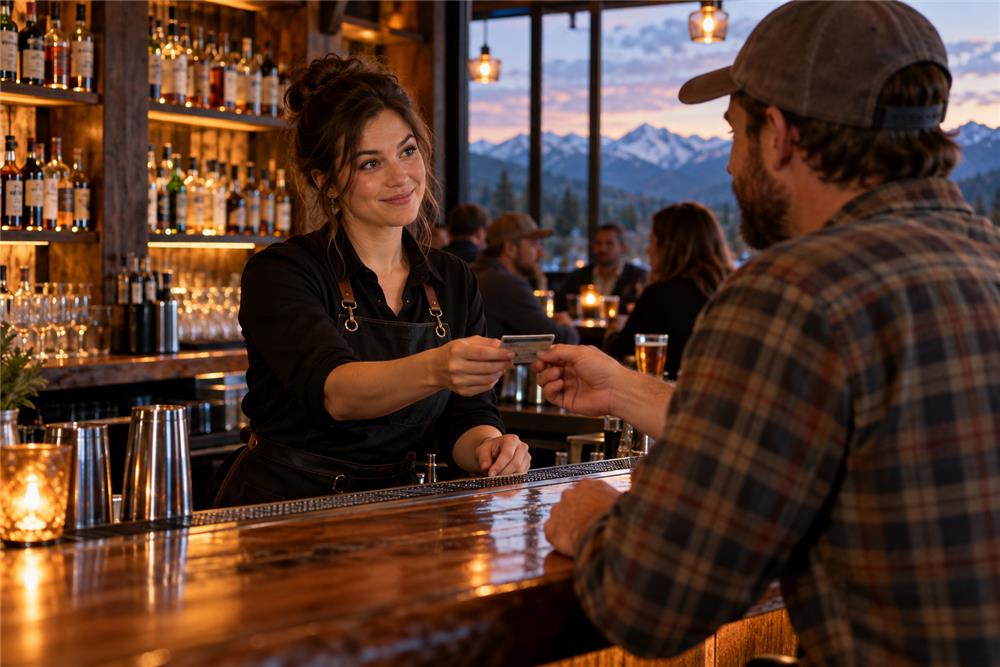
Practical from
the first lesson.
Clear explanations, guided activities, and model workplace responses. Practice questions help you reflect; they are separate from required instruction and the official exam.
Reading and activities make up the designed duration. This is not a promise of 120 minutes of video.
Check my course selection →01Your Role in Responsible Alcohol Service10 min
Your Role in Responsible Alcohol ServiceWhether you serve drinks at a table, work behind a bar, sell packaged beer, or make an approved delivery, each alcohol transaction needs a careful decision.You are part of the safety teamAlcohol service is more than taking an order or scanning a package. Your job is to notice the situation, check who will receive the alcohol, and decide whether it is okay to continue. You can be friendly and still say no.A refusal should not humiliate a customer. You do not have to diagnose a condition, prove someone committed a crime, or win an argument. You do need to explain the decision calmly, call for backup when needed, and act if someone is in danger.A simple service routineObserve → Verify → Decide → Explain → Document. Use this same sequence with regular customers, large groups, and people who are in a hurry.Different jobs, same responsibilityRestaurant server: Verify the actual drink recipient, not just the person paying the bill.Bartender: Watch for changes in behavior before another round.Store cashier: A sealed package still requires a lawful sale.Delivery worker: A paid online order still needs the required age and safety check at the door.Your workplace may have stricter procedures. Know them before your shift. If you do not know the next step, pause the alcohol transaction and ask the person responsible for alcohol operations.Why licenses matter in MontanaMontana has regulated alcohol distribution and sales since the end of national Prohibition in 1933. Different business licenses allow different products and types of service. A restaurant license, brewery sample-room privilege, store license, and delivery authorization are not interchangeable.A business must follow its actual license, local restrictions, and applicable law. A training certificate does not add a new delivery service, give permission to sell a restricted product, or make an employee eligible for every alcohol-related job.The state alcohol-regulation agency approves training and oversees licensing. You do not need to memorize government office names during a customer transaction. You do need to know your workplace’s written rules and who can answer a licensing question.Training and worker ageMontana sellers and servers, and their direct supervisors, generally must complete approved training within 60 days of hire and renew it every three years. Existing workers at a newly licensed business generally have 60 days after licensure.Third-party delivery drivers have stricter timing: qualifying training must be completed before their first alcohol delivery. Third-party delivery drivers must be at least 21. Montana also has an age-18 rule for specified bartender and alcohol-server duties; different packaged-retail work requires the employer to check the child-labor rules that apply to that job.Employers keep training records. Only the approved course scope and actual completed requirements determine whether a certificate is valid for your duties.Start-of-shift situationsAt a restaurant — See the worked exampleA new server is assigned tables but does not know whom to call about a questionable alcohol order.Why this works: Before serving, find the on-duty manager, backup contact, ID-check procedure, and method for recording a refusal.At a grocery — See the worked exampleA cashier asks whether training allows the store to deliver beer to any address.Why this works: No. The business must have the proper delivery authority, and drivers, products, locations, and handoff rules must be checked separately.When the customer is impatient — See the worked exampleA guest says, “You checked me last month. Just bring the drink.”Why this works: Continue the required check for this transaction under your workplace policy. Familiarity does not replace a lawful decision.Remember These Key PointsEvery alcohol transaction is a safety decision.Different licenses and job duties have different rules.Know your manager, emergency procedure, and training responsibilities.
02Spot Intoxication and Stop Service Safely15 min
Spot Intoxication and Stop Service SafelyA good server pays attention before pouring the next drink. Here is how to notice possible impairment and refuse service without starting an argument.Look for changes you can describeMontana prohibits selling, serving, or giving alcohol to someone who is actually, apparently, or obviously intoxicated. Giving away a free drink or pouring a smaller drink does not avoid this restriction.Look for repeated stumbling, slurred words, spills, trouble focusing, trouble using payment, or a noticeable change in behavior. Notice how several signs fit together. A single dropped card or unusual accent is not proof.Disabilities, injuries, medical conditions, and language differences may affect speech or movement. Ask respectful questions, offer appropriate help, and bring in the manager if you are unsure. Do not make assumptions about age, race, appearance, disability, or how often someone visits.Monitor throughout service: when taking an order, delivering a drink, checking a table, and receiving another request. A guest may have consumed alcohol before arriving, and behavior can change while they are at your workplace.Make a clear refusalA helpful sentence is “I cannot serve another alcoholic drink. I can offer water and ask my manager to help.” Say it calmly and clearly. Do not offer “just a half pour” or “maybe after coffee” as a workaround.Let the manager and other serving staff know that further alcohol service is stopped. Handle the conversation away from a crowd when safe, but do not isolate yourself. If a guest becomes threatening, step back and follow the workplace safety plan.Water, food, and help arranging a sober ride may be useful, but they do not instantly remove impairment or authorize another drink. Never physically restrain someone or seize keys as a normal refusal tactic. Call for emergency help if there is immediate danger.Follow a Missoula restaurant exampleLast round in Missoula — See the worked exampleAt 9:15 p.m., Casey—normally a regular, clear-speaking guest—now stumbles against a stool twice and slurs a request for another whiskey.Observe: Bartender Morgan notices the two concrete changes instead of guessing a blood-alcohol number.Decide: Morgan does not pour and says, “I cannot serve another alcoholic drink. I can offer water and ask my manager to assist.”Pressure: Casey says the owner knows them. Morgan explains that being a regular does not change the decision.Coordinate: Manager Jordan and the other bartender support the same cutoff and offer permitted transport assistance.Record: Staff note the time, the stumbled steps, slurred request, no further pour, and whom they notified.Why this works: A respectful, consistent refusal works better than a smaller drink or a debate about how intoxicated someone is.Try the other important decisionsThe customer demands the last drink — See the worked exampleA guest says, “You sold me one ten minutes ago, so you have to sell another.”Why this works: Each request needs a new decision. An earlier sale never requires you to continue serving if the guest now shows concerning signs.Someone offers coffee as a solution — See the worked exampleA customer promises to drink coffee, then order another beer.Why this works: Coffee does not quickly make someone sober or cancel a correct refusal. Explain that service is still stopped.A coworker missed the refusal — See the worked exampleThe guest walks to a second station after being cut off.Why this works: Quietly tell that employee and the manager about the decision so alcohol is not served again by mistake.Possible emergency — See the worked exampleThe guest becomes unresponsive or has slow, irregular breathing.Why this works: Call 911 immediately when an emergency is suspected, give the location and observations, and follow dispatcher instructions.Remember These Key PointsLook for specific, observable changes—not stereotypes.Refuse clearly and make sure the entire team follows the decision.Offer safe help without promising that coffee, food, or time makes more alcohol okay.
03Make Safe Packaged Alcohol Sales15 min
Make Safe Packaged Alcohol SalesStores have less time with each customer, but the responsibility is the same: do not make an improper alcohol sale just because the bottle or can is sealed.A package does not change the ruleA person buying alcohol in a grocery or convenience store may already be impaired. “I will drink it at home” does not create an exception. Look at the person receiving the alcohol, not only the item in the cart.Use the short interaction to notice speech, balance, ability to handle payment, confusion, and behavior. Consider the whole encounter. One awkward movement is not enough by itself, and a disability or inaccessible checkout screen may need an accommodation rather than a refusal.If someone may need immediate medical help, responding safely is more important than finishing a transaction. A manager can assist with unusual situations.Pause first, explain secondIf there are strong signs of intoxication, pause the alcohol transaction before taking payment. Keep the alcohol on the store side when practical.Say: “I cannot complete this alcohol purchase. My supervisor can assist.” Keep your tone respectful. If permitted and safe, unrelated groceries may be purchased separately. Do not turn a canceled alcohol item into a hidden transfer.Do not chase a customer through the parking lot or argue over the package. Your safety and the safety of coworkers come first. Know the store emergency procedure before a difficult shift.When a second person tries the same purchaseA refused customer might hand a companion money, ask for the same beer, and send the companion to another register. That is different from a sober adult merely shopping near someone impaired.Share only what you actually observed: who selected the package, the words you heard, the cash handoff, the other register, and the prior refusal. Ask the manager to decide how to respond under policy. Do not accuse every pair of customers of buying for each other.A complete Billings exampleThe second buyer in Billings — See the worked exampleRiley places beer on a store counter, repeatedly drops a card, leans against the counter, and slurs a request. Taylor refuses. Riley says to a companion, “Get that beer for me,” and hands them cash.Observe: Taylor notes several behaviors, not just the dropped card.Pause: The sale is stopped before payment; the beer is not transferred.Linked attempt: Taylor tells the next cashier about the specific cash handoff and words heard.Support: The manager maintains the refusal and helps staff manage the line and safety.Write: The report lists the time, behavior, refusal, linked attempt, notifications, and any known outcome.Why this works: A sale does not become safe simply because a companion tries to pay after a specifically connected refusal.More situations at the registerA payment screen is inaccessible — See the worked exampleA customer has trouble using a checkout device but otherwise shows no signs of impairment.Why this works: Offer appropriate assistance. Difficulty with technology or accessibility does not by itself show intoxication.A customer offers to wait — See the worked exampleA person refused for apparent intoxication asks you to hold the package for five minutes.Why this works: Do not promise a brief wait will make the alcohol sale appropriate. Explain the refusal and ask for management help.The line grows — See the worked exampleSeveral customers are waiting while the clerk handles a refusal.Why this works: Have another worker help the queue. A long line is not permission to complete an unlawful alcohol sale.Record exactly what happened — See the worked exampleYou saw money handed over but did not hear the words.Why this works: Record that you saw the handoff. Do not invent a quotation or pretend you know the relationship between the people.Remember These Key PointsPackaged alcohol sales still require age and intoxication checks.Pause before payment and use a calm, clear refusal.Connected second-buyer attempts depend on facts, not assumptions.
04Prevent Underage Drinking at Bars and Restaurants15 min
Prevent Underage Drinking at Bars and RestaurantsAt a table, the person paying may not be the one who drinks. You must know who will receive alcohol and whether they are at least 21.Check the person receiving the drinkMontana’s retail alcohol rules prohibit serving alcohol to people under 21. If someone orders a round for friends, identify each person who will receive an alcoholic drink. A shared bottle or pitcher still needs careful service.An adult at the table does not make everyone else eligible. Do not hand alcohol to a younger guest because a parent offers to pay, or because the family says the child drinks at home.Montana law has narrow exceptions for certain family, medical, or religious situations. Those exceptions do not authorize a restaurant or bar to sell or serve alcohol to an underage guest.Check IDs using a real verification process: birth date, photograph, document condition, and identity. An older companion’s word or a payment card does not replace age verification.What to watch for at group tablesSomeone orders alcohol for a guest who has not been age-verified.A guest uses an ID that may belong to someone else.An adult orders a pitcher and immediately passes a glass to a younger guest.A customer says a birthday is tomorrow and wants service today.A parent asks for a “small exception” to celebrate a family event.These situations need facts, not assumptions. Continue checking the actual recipient at the time alcohol is served and during the meal. When a transfer to an underage person is observed, stop the improper service and contact the manager.Use the workplace’s safe procedures. Do not grab a glass from someone in a way that could cause a confrontation. The goal is to stop unlawful service and keep everyone safe.Use a helpful, firm responseYou can say: “I cannot provide alcohol to someone under 21, even with a parent’s permission. I can offer a nonalcohol drink instead.” Ask a manager to support that decision if the family argues.A manager should reinforce the refusal, not order an employee to ignore the law to save a sale or avoid a bad review. If you are directed to make a prohibited sale, keep it stopped and use the owner or compliance contact.A Bozeman family celebrationThe parent requests wine for Drew — See the worked exampleAt a Bozeman restaurant, a parent orders wine and says that 19-year-old Drew should receive a glass.Identify: Server Lee checks who will actually receive each drink.Explain: Lee refuses wine for Drew and offers a nonalcohol alternative, even after the parent gives permission.Handle pressure: The parent threatens a bad review. Lee calmly maintains the decision and calls manager Jordan.Watch: If an adult later passes wine to Drew, staff stop improper service through the safe manager-supported procedure.Handoff: The next server receives only the necessary facts about the refusal and manager decision.Why this works: Know the actual drink recipient, refuse the underage service, and keep staff decisions consistent.Three additional table decisionsBirthday tomorrow — See the worked exampleA guest says, “I turn 21 at midnight, so can I order now?”Why this works: Use the actual local date when making the sale and verify the complete birthday. A future birthday is not permission to serve early.A large group order — See the worked exampleA person asks for four beers but only two people have been verified as eligible.Why this works: Find out who will receive each alcoholic drink and complete the required checks before delivery.Another server takes over — See the worked exampleYou refused alcohol for one guest and your shift is ending.Why this works: Give the incoming server a brief factual handoff so an incorrect repeat order is not served.Remember These Key PointsVerify every person who will receive alcohol.Parental permission does not authorize an underage bar or restaurant sale.Group orders and shared pitchers do not bypass eligibility checks.
05Prevent Underage Sales and Make Safe Deliveries15 min
Prevent Underage Sales and Make Safe DeliveriesA sale at a grocery register and a handoff at a front door are separate decisions. Both must be lawful and safe.The person paying is not always the person receiving alcoholAn adult may try to buy beer for someone under 21. Watch for specific facts: the younger person chooses the package, states that it is for them, asks an adult to pay, or hands over cash.Do not refuse everyone who shops with a child or a younger-looking friend. Being together is not proof of an unlawful purpose. The real question is what you actually saw or heard.If the sale appears linked to an underage recipient, pause. You might say: “Based on what I observed, I cannot complete this alcohol sale. My manager can help.” Do not advise the customers to return without the younger person or try a different cashier.Delivery needs its own checksFor authorized third-party delivery, the driver must be at least 21, meet eligibility rules, and finish approved qualifying training before making the first alcohol delivery. The permitted third-party products are beer and table wine.The recipient at the delivery address must also be at least 21. Use the required ID-scanning technology or a method actually approved by the department. Observe the person; do not deliver to someone apparently or obviously intoxicated.Online payment, a prior account check, or an app checkbox does not replace the check at the door. Do not leave beer on a porch or give it to a child who says an adult is upstairs.If an approved scanner fails, contact dispatch. Keep the alcohol until a permitted method is available, or follow the failed-attempt and return instructions. Never invent an ID check just to mark the order complete.Know delivery limitsRetail pickup must be within the seller’s authorized alcohol sales hours.Third-party delivery must finish within one hour after the retailer’s cutoff; this does not extend the time for retail sales.Some destinations are prohibited, including higher-education campuses and places without a permanent street address.Undelivered alcohol returns to the selling retailer by the end of the route, or as soon as practicable if it is closed.The third-party business keeps required delivery records for three years; its drivers may not be paid based on whether alcohol delivery succeeds.Other delivery arrangements, including certain restaurant delivery endorsements, have their own rules. A qualifying restaurant endorsement may allow employees age 21 or older to deliver original-packaged beer and wine with food prepared at that restaurant, subject to product and price restrictions. Never assume your training certificate alone permits delivery.A connected retail purchase near HelenaAn adult is asked to buy for a teenager — See the worked exampleAt a Helena-area market, Sam says, “I am nineteen, so you buy this for me,” chooses beer, and hands adult Alex cash.Observe: Clerk Quinn hears Sam’s words and sees the cash handoff.Pause: Quinn refuses the alcohol without accusing everyone in the group of a crime.Explain: Alex says the beer is for Alex, but Quinn accurately describes the earlier request and keeps the refusal.Coordinate: The manager supports Quinn and alerts another cashier about this specific attempted sale.Record: Quinn writes what was seen and heard, when the sale was stopped, and whether alcohol was transferred.Why this works: An adult buyer does not remove evidence that the alcohol is intended for someone under 21.Practice doorstep decisionsThe actual recipient is absent — See the worked exampleA neighbor says they will take the alcohol for the customer who paid online.Why this works: Do not transfer alcohol without completing the required recipient verification. Contact dispatch and follow the authorized plan.The customer is visibly impaired — See the worked exampleThe customer at the door speaks with slurred words and repeatedly loses balance.Why this works: Keep the alcohol. Refuse the delivery, protect your safety, notify dispatch, and document the unsuccessful handoff.The reader fails — See the worked exampleThe scanner cannot verify the presented ID.Why this works: Use an alternative only if the department actually approved it. Otherwise, retain the alcohol, record the attempt, and follow return procedures.An unsafe destination — See the worked exampleThe delivery location is a restricted campus or lacks a permanent street address.Why this works: Do not improvise a delivery. Confirm the destination restrictions with dispatch and follow the failed-attempt procedure.Remember These Key PointsCheck the true intended recipient when selling alcohol.Age verification at checkout does not replace verification at delivery.Know which delivery methods, products, people, times, and locations are allowed.
06Alcohol Laws, Business Hours, and Manager Support15 min
Alcohol Laws, Business Hours, and Manager SupportMontana businesses do not all have the same alcohol privileges or closing time. Knowing the correct rule for your workplace can prevent a serious mistake.Legal trouble can take three formsCriminal: A person may face an offense, fine, or jail time.License action: The state may reprimand, fine, suspend, or revoke a business license under applicable conditions.Civil claim: Someone who was harmed may seek damages under Montana’s specific laws.One event can raise more than one issue, but a police citation is not itself a license suspension, and a complaint is not a court judgment. A prohibited sale does not automatically prove every part of a civil lawsuit.Civil alcohol-furnishing rules include circumstances involving underage consumers whose age was known or not reasonably checked, visibly intoxicated consumers, forced drinking, and alcohol falsely described as nonalcoholic. Claims also depend on legal requirements such as proof and causation. Do not promise a legal outcome.Knowingly selling or giving alcohol to a person under 21 can carry a first-conviction fine up to $500 or up to six months in county jail, or both; a second conviction can carry a fine up to $1,000, six months, or both, subject to the law’s conditions and exceptions.Business license consequences may include a reprimand, civil penalty up to $1,500, suspension up to three months, or revocation under statutory conditions. Separate training-law violations can have $50 / $200 / $350 penalties for the first three qualifying offenses within three years. These are not automatic combined penalties for every incident.If an official notice arrivesPreserve it and related records. Tell the owner or manager promptly so it can be routed to the insurer or suitable legal adviser. Never change reports to make a mistake disappear.Know the hours for your type of businessThe general retail alcohol cutoff is 2:00 a.m., with the ordinary sales window beginning at 8:00 a.m. But that is not the right answer for every Montana business. Local rules and license conditions may be stricter.Ordinary general retail operation: generally 8:00 a.m. to 2:00 a.m., unless a stricter rule applies.Restaurant beer-and-wine license: generally 11:00 a.m. to 11:00 p.m. for service, under its special license rules. Do not apply this cutoff to a different restaurant license.Small brewery sample room: generally 10:00 a.m. to 8:00 p.m., with a 48-fluid-ounce per-person daily limit for covered prepared on-premises servings. Other license privileges must be verified separately.Microdistillery prepared servings: typically follow sample-room hours, with a two-fluid-ounce amount limit under the specified provision. Packaged product sales have different conditions and hours.Agency liquor store: may operate within the applicable 8:00 a.m. to 2:00 a.m. window, subject to the relevant restrictions.These are summaries, not permission to operate under another business’s license. Your manager must give you the correct policy for your exact license, product, location, and activity.Daylight saving time is not an extra selling hourIn autumn, a location subject to the 2:00 a.m. cutoff stops alcohol service when the clock first reaches 2:00 a.m. Then the clock moves back to 1:00 a.m. The repeated hour does not restart sales.In spring, sales stop at 2:00 a.m. before clocks move ahead. Grocery or convenience stores may continue permitted nonalcohol sales during alcohol cutoff hours. Never manually change a register clock to defeat the cutoff.Managers, outside alcohol, and inspectorsYour manager is responsible for helping the team follow licensed operating rules. If a customer asks to bring a personal bottle into an ordinary bar service area, do not assume a corkage fee makes it allowed. Check the specific licensed arrangement before permitting outside alcohol.A manager should never pressure staff into a prohibited sale. If told to break the law, keep the transaction paused and report through the owner or compliance contact.Cooperate with lawful inspections by authorized officials and tell management. Do not hide records, conceal alcohol, or give false statements. Report a pattern of illegal activity instead of treating it as a normal house rule.Use these workplace decisionsTwo restaurants, different cutoff times — See the worked exampleRestaurant A has an all-beverages license; Restaurant B holds a restaurant beer-and-wine license. Both ask whether they may sell at midnight.Why this works: Do not assume the same rule for both. Check the specific license. The special restaurant beer-and-wine service window ordinarily ends at 11:00 p.m.; the general retail rule is different.A brewery guest wants one more pour — See the worked exampleIt is closing time at a small brewery sample room, and the guest says they have not reached the daily serving limit.Why this works: Both the allowed time and serving-amount rules matter. An unused amount does not extend the service hours.The fall clock change — See the worked exampleIt is 2:00 a.m. at an ordinary late-night venue; clocks will return to 1:00 a.m.Why this works: Stop the alcohol activity as required at 2:00 a.m. The repeated hour does not let alcohol service begin again.A customer brings a bottle — See the worked exampleA guest wants staff to open their personal bottle for a fee.Why this works: Do not assume this is allowed. Ask the manager to check the actual licensed permissions before agreeing.An inspector arrives — See the worked exampleAn authorized enforcement officer asks for a lawful examination of licensed premises.Why this works: Cooperate through the proper process, contact the manager, and preserve records honestly.A claim arrives — See the worked exampleAn attorney letter concerns an earlier service incident.Why this works: Send it promptly to the owner or appropriate adviser. Do not decide liability yourself or erase the incident report.Remember These Key PointsCriminal charges, license action, and civil lawsuits are different.Your actual license—not a generic rule—determines products, hours, and service privileges.Managers should support lawful decisions; never hide a problem or extend a cutoff.
07Montana ID Guide: 5 Steps to Check an ID10 min
Montana ID Guide: 5 Steps to Check an IDAn ID check has two jobs: confirm the customer is at least 21, and confirm that the ID belongs to that person. Follow these five simple steps.The 5 Steps to Check an IDAsk: Request identification politely, following your workplace’s carding policy.Look: Check for a government-issued credential with a photo, birth date, and no alteration.Compare: Look at the person, then the photograph and identifying details. Does the document seem to belong to them?Calculate: Check the full date of birth—month, day, and year—against today’s local date.Decide: If age or identity cannot be confirmed, pause alcohol service and ask your manager about the lawful next step.Common examples include driver’s licenses, U.S. and foreign passports, military IDs, and Montana tribal IDs, as long as they meet the criteria. Other government-issued documents can qualify. A card from a state college may meet the requirements; a private school’s ID is not automatically government-issued.Montana’s alcohol-purchase guidance says an ID is not automatically unacceptable just because it is expired. The ID must still permit a trustworthy age and identity check, and employers may use stricter carding rules. Explain stricter requirements honestly as company policy.Physical IDs: do not skip the personA birth date can show an eligible age even if the photo belongs to someone else. Look for mismatched identifying features, signs of alteration, or unanswered questions. A different haircut alone does not prove fraud.If identity is uncertain, ask neutrally: “I cannot confirm this identification belongs to you. My manager can help review another acceptable ID.” Do not accuse the customer loudly or confiscate the document on your own initiative. Follow lawful company procedures and law-enforcement guidance.Check the complete birthday. In a fictional sale on September 26, 2026, someone born September 26, 2005 has reached 21. Someone born September 27, 2005 has not. On a real shift, use today’s date, not the example cutoff.Digital IDs: a genuine credential is different from a pictureMontana recognizes government-certified mobile driver’s licenses and state IDs. To verify one, use the workplace’s supported reader app or compatible verification device and approved procedure.A screenshot, ordinary photo, or copied image of a driver’s license is not automatically a verified mobile ID. Do not approve a picture because it shows an old-enough birthday. Also, do not tell customers that Montana rejects every genuine digital ID.Do not photograph or store ID information on your personal phone. Follow required privacy controls for any approved scanner. An electronic result never replaces checking that the person matches the credential or observing possible impairment.Two Montana ID examplesThe borrowed ID in Great Falls — See the worked exampleA guest at a Great Falls restaurant shows an ID with an eligible birth date, but the face in the photo does not appear to match the guest.Notice: The issue is identity, not just the birth date.Ask: Server Avery politely explains that the match is unclear and asks the manager for help.Decide: The mismatch remains unresolved, so no alcohol is served. A nonalcohol option is offered.Record: The note says that identity could not be verified, not that the guest was proven to be a criminal.Why this works: An ID showing someone over 21 is not enough unless the ID can be matched to the person.The phone image in Kalispell — See the worked exampleDevon shows a screenshot of a license on a phone at a Kalispell grocery. The birthday looks eligible, but the screenshot cannot be verified as a genuine mobile credential.Explain: Ellis tells Devon that an image is not a completed mobile-ID verification.Offer: Ellis asks for an acceptable physical ID or a verifiable government-certified mobile ID using the store’s process.Pause: The supervisor checks whether an approved option is available; none is provided.Close: The sale is refused and recorded as unable to verify age and identity—not automatically “customer underage.”Why this works: The correct approach respects genuine digital ID while refusing unverified pictures.If a check still feels uncertainThe reader says “pass,” but the photo seems wrong — See the worked exampleA scanner returns an eligible age, while you see a possible mismatch between the person and the ID.Why this works: Do not rely only on a green scanner result. Recheck identity, ask for management help, and pause the alcohol transaction if unresolved.The customer is frustrated — See the worked exampleThe customer says, “It is obviously my ID. Just sell me the drink.”Why this works: Explain the requirement calmly and request manager support. The need to verify age and identity does not disappear under pressure.Remember These Key PointsAlways check photo, birth date, and signs of alteration.Verify that the credential actually belongs to the person.Real mobile IDs require the proper verification process; screenshots are not the same.
08Incident Reports: Write Facts, Not Guesses5 min
Incident Reports: Write Facts, Not GuessesA good incident report helps coworkers understand what happened. It may also matter later if an incident is reviewed.Write it as soon as it is safeFirst respond to any immediate danger. Then use the workplace’s approved report system while the details are fresh. Include the date, time, location, employee, alcohol involved, observations, action taken, manager or witnesses, and known outcome.Be specific. “Customer stumbled against the counter twice and slurred a repeated request” is useful. “Customer was trouble” does not describe what happened.Do not guess medical diagnoses, blood-alcohol levels, or motives. If you know a fact only because a coworker told you, label it as that coworker’s report. Do not create an exact quotation unless you reliably remember the words.Correct mistakes openlyPeople make typing mistakes. If a detail needs fixing, keep the original and add a dated note explaining what was corrected, who corrected it, and why. Do not secretly move the event time or change a refusal to make earlier actions look better.Keep incident records private in the authorized system. Do not post details online or take photos of customer IDs for personal storage. Follow your employer’s retention and legal-hold procedures. A report is helpful, but it does not guarantee legal protection.Walk through a real-looking exampleA refusal at register two — See the worked exampleAt 8:12 p.m., a customer repeatedly drops a payment card and leans on the counter. Clerk Taylor pauses a beer sale before payment. Jordan is notified at 8:13 p.m. The customer leaves without alcohol at 8:16 p.m.Time and place: Include 8:12 p.m. and register two.Observed behavior: List the repeated card drops and leaning; do not diagnose intoxication.Action: Record that the alcohol sale stopped before payment, the manager was notified, and the package stayed in the store.Outcome: Include that the customer left without alcohol only because that fact is known.Correction: If the register number was typed wrong, add an attributed correction without removing the original entry.Why this works: The report tells what happened and what staff did without inventing missing details.Before finishing the reportWould another employee understand the order of events?Did you separate your observations from someone else’s report?Did you avoid accusations or medical labels?Did you record whom you contacted and what happened next?Did you store the note only where your employer permits?Remember These Key PointsRecord promptly after addressing immediate safety.Use observable facts, not assumptions or labels.Keep original records and add honest corrections when needed.
09Compliance Checks and Honest Follow-Up5 min
Compliance Checks and Honest Follow-UpYou should follow the same good alcohol-sale process every day—not use a different process only when you think someone is testing you.What is a compliance check?Law enforcement may conduct alcohol sales compliance checks to see whether sellers follow the rules. Do not try to recognize who is part of a check. A shopper’s confidence, clothing, companions, or payment method is not proof of eligibility.Use your regular approach: verify the full birth date and identity, observe the recipient, check the applicable rules, and pause whenever you cannot complete a required check.A failed check can lead to workplace discipline, court costs, fines, and other consequences depending on the facts. License sanctions follow their own legal standards; they are not automatic in every situation.Respond correctly if something goes wrongTell the manager promptly. Preserve the transaction information, what you checked, what you missed, and any related incident notes. Use a truthful description even if the error is embarrassing.Do not backdate training, create a fake ID-check record, or ask a coworker to say they saw something they did not. If a training provider or regulator follows up about a failed check, answer through the verified process with accurate facts.Learn from a missed birthdayThe customer turns 21 next week — See the worked exampleA cashier sees a birth year that seems old enough but forgets to check the month and day. The customer has not yet had a 21st birthday.Identify the mistake: The cashier checked the birth year instead of the full date.Preserve the record: The original transaction and event report are kept as they happened.Fix the process: Staff practice comparing the complete date to today’s local date.Confirm the improvement: The manager observes the corrected procedure and documents retraining truthfully.Why this works: Real improvement comes from fixing the check, not from recognizing a future test customer.What consistent service looks likeThe customer looks older — See the worked exampleA confident customer appears to be in their thirties and says they forgot ID.Why this works: Follow the employer’s carding rules. Appearance does not replace a required verification.A coworker asks you to rewrite a record — See the worked exampleSomeone suggests changing a refusal time after a failed inspection.Why this works: Do not alter a record to misrepresent the event. Keep the original and report the concern through the proper process.The manager wants a quick fix — See the worked exampleThe business wants employees to memorize what test customers look like.Why this works: Recommend consistent age-check training instead. A reliable process works for all customers.Remember These Key PointsUse the same lawful process for every customer.Own mistakes, preserve records, and fix the actual weak step.Do not try to identify or coach around compliance checks.
10Alcohol Effects and Emergency Warning Signs5 min
Alcohol Effects and Emergency Warning SignsAlcohol affects people in different ways. You do not need to diagnose the cause of impairment to spot danger and call for help.How alcohol can affect someoneAlcohol can slow reaction time and change judgment, balance, speech, and coordination. A person may first seem relaxed and later become confused or unsteady. Everyone reacts differently.The effects depend on many things: how quickly alcohol was consumed, food, medication, other substances, and personal sensitivity. Alcohol can keep entering the bloodstream after someone stops drinking. Someone who drinks often is not automatically safe to drive or eligible for more service.Cannabis, prescription medicines, and other drugs can also affect a customer. Do not guess which substance caused the behavior. Pay attention to what you can see and ask for appropriate assistance.Warning signs that need urgent actionThe person is very difficult to wake or is unresponsive.Breathing is slow, irregular, or appears to stop.The person has a seizure.The person is vomiting repeatedly, especially when not fully alert.If an overdose or another medical emergency is suspected, call 911 immediately. Do not wait until every warning sign appears. Give the location and the observations you know, not guesses.Stay nearby if it is safe and follow dispatcher instructions. Do not force food or drink, pour coffee into someone, put them in a cold shower, or tell them to sleep in a car. For an unconscious person who is breathing, follow dispatcher guidance about safe positioning. Follow CPR directions if instructed and within your training.Worked emergency responseA guest cannot be awakened — See the worked exampleA restaurant guest who was talking earlier is now very difficult to wake and is breathing irregularly.Recognize: These are possible emergency signs; do not wait to determine a blood-alcohol level.Call: Dial 911 and state the exact location, access point, breathing concern, and when it was observed.Coordinate: If possible, ask a coworker to meet responders while someone stays with the person safely.Help: Follow dispatcher directions. Do not force food, drink, or walking.Record: Once the emergency is handled, inform management and document only what was known and done.Why this works: Acting promptly is more important than guessing the medical explanation.Remember These Key PointsObserve the customer’s condition; do not guess a blood-alcohol number.Call 911 right away for suspected poisoning or breathing danger.Follow dispatcher directions and record the facts afterward.
11Standard Drinks, Serving Sizes, and ABV5 min
Standard Drinks, Serving Sizes, and ABVTwo drinks can look the same size but contain very different amounts of alcohol. Serving size and alcohol by volume both matter.What is one standard drink?In the United States, a standard drink contains about 0.6 fluid ounces of pure alcohol. These examples have about the same amount of pure alcohol:12 ounces of beer at 5% ABV5 ounces of wine at 12% ABV1.5 ounces of spirits at 40% ABVABV means alcohol by volume. A larger glass or stronger beer may contain more than one standard drink. The size of the container alone does not tell you the alcohol amount.Knowing the amount does not allow you to calculate whether someone is safe to drive or whether serving more alcohol is legal. Keep observing the actual person.A simple way to compare drinksMultiply the number of fluid ounces by the ABV written as a decimal. Then divide by 0.6 to estimate the number of U.S. standard drinks.Example: A 12-ounce beer with 5% alcohol: 12 × 0.05 = 0.6 ounces of alcohol. Then 0.6 ÷ 0.6 = 1 standard drink.The calculation estimates pure alcohol. It does not estimate blood-alcohol concentration and should never replace responsible-service judgment.Three worked portion examplesStrong craft beer — See the worked exampleA can holds 16 ounces of beer at 8% ABV.Why this works: 16 × 0.08 = 1.28 ounces of pure alcohol. 1.28 ÷ 0.6 ≈ 2.13 standard drinks. That single can contains more than two standard drinks.A large glass of wine — See the worked exampleA glass contains 9 ounces of wine at 12% ABV.Why this works: 9 × 0.12 = 1.08 ounces of pure alcohol. 1.08 ÷ 0.6 = 1.8 standard drinks. A “glass” may contain more than one standard drink.A strong cocktail — See the worked exampleA cocktail includes 3 ounces of spirits at 40% ABV, plus nonalcohol mixers.Why this works: 3 × 0.40 = 1.2 ounces of pure alcohol. 1.2 ÷ 0.6 = 2 standard drinks. Additional alcoholic ingredients would increase that amount.Use the information responsiblyFollow approved recipes and measured pours. Ask the bartender for the recipe rather than assuming every cocktail is one standard drink. Do not describe a drink as alcohol-free when it contains alcohol.A small order does not prove a customer is unimpaired. They may have been drinking somewhere else. Continue using observation, age checks, and the refusal rules you learned earlier.Remember These Key PointsA standard drink is about 0.6 fluid ounces of pure alcohol.Both the serving volume and ABV determine the amount of alcohol.Drink count is not a safety or driving guarantee.
12Your Shift-Ready Alcohol Service Checklist5 min
Your Shift-Ready Alcohol Service ChecklistYou have learned how to make responsible alcohol service decisions. Bring these habits to every shift, including the difficult ones.Before your shiftConfirm your business’s actual alcohol license privileges and the hours that apply.Know where to find physical-ID and genuine mobile-ID procedures.Know the manager and backup contact.Review the refusal, emergency, and incident-report procedures.If you handle delivery, confirm the driver, product, route, and doorstep requirements.During service or a saleObserve: Notice the customer, intended drink recipient, and relevant behavior.Verify: Check age, identity, service limits, and the correct business rules.Decide: If a required check cannot be completed, pause or refuse alcohol.Explain: Use a short, respectful answer; let the manager and coworkers support the same decision.Document: Record important incidents honestly and tell the next shift what it needs to know.A refusal is not punishment. It means that a particular alcohol transaction cannot continue. You can still offer a permitted nonalcohol option or ask for safe assistance.Do not continue selling because someone is a regular, a supervisor pressures you, or the line is long. Seek emergency help immediately when someone appears to be in danger.Three final shift situationsOpening shift check — See the worked exampleYou are starting in a new restaurant and the team says, “We always close at 2.”Why this works: Verify the actual license and local restrictions. A restaurant beer-and-wine license can have an earlier service cutoff. Ask the manager to explain this location’s rule.A refusal near closing — See the worked exampleYou paused a sale because an ID did not match the person. Another employee asks whether they can finish it.Why this works: Share the unresolved verification facts and manager decision. Do not permit a different worker to quietly bypass the refusal.An incident at handoff — See the worked exampleThe next shift arrives after a difficult customer situation.Why this works: Pass along the manager contact, factual observations, decision, and incident-record location without sharing more personal information than necessary.What finishing the course meansA valid Montana training certificate depends on completing the approved course that matches your duties, the required instruction and activities, and the official examination requirements. The required passing score for the official final exam is at least 80% under the submitted training design; final agency instructions and retake policies must be confirmed.Reading material and practice knowledge checks do not replace the official final exam. An administrative reviewer login should never earn student instructional credit. Final-exam and knowledge-check time must not be counted as instruction time.Keep your accurate completion record available for your employer and complete retraining when required. Never claim that practice questions or a draft lesson by themselves create an approved credential.Remember These Key PointsObserve, verify, decide, explain, and document.Protect safety and dignity at the same time.Finish the approved training and assessment process for your actual job duties.