
Your Role as a Responsible Alcohol Seller
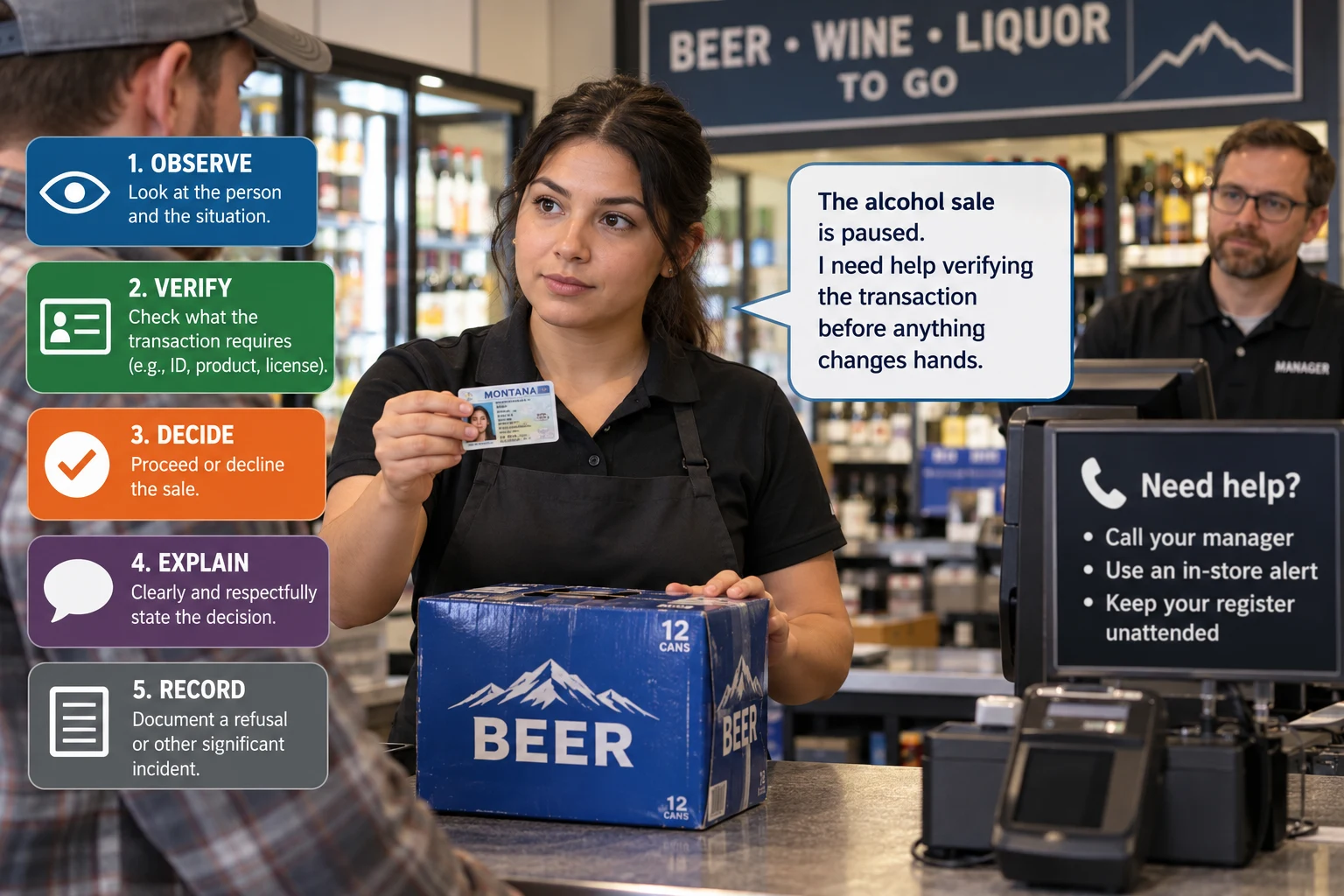
Your Role as a Responsible Alcohol Seller
When you sell a sealed bottle or can, you make a safety decision—not just a sale. Here is a simple routine you can use on every shift.
A safe sale starts with you
Before alcohol changes hands, observe the customer, check what is required, decide, explain your decision, and report important problems. Use the same process when the store is busy or the customer shops there every week.
You are not expected to diagnose a medical condition or argue with someone. You are expected to pause a sale when something is wrong and ask for help. A calm refusal can protect the customer, the store, and the community.
Example
A customer says, “I am in a hurry; just ring it up.” A safe response is: “I need to finish the required check before I can sell the alcohol.”
What the business license means
Montana regulates which businesses may sell alcohol and what products they may sell. Different licenses allow different activities. A convenience store cannot add a bar or delivery service just because an employee has taken training.
Montana created its alcohol-control system after national Prohibition ended in 1933. Today, spirits and beer or wine move through different authorized supply channels. The details vary by license, so check the actual license and workplace rules rather than guessing.
The state sets alcohol laws and approves training. Your employer may set stricter safety rules, but cannot give permission to break state law.
When training is required
Montana sellers, servers, and their direct supervisors generally must complete approved training within 60 days of being hired and renew it every three years. Workers already employed when a business first becomes licensed generally have 60 days after licensure.
Third-party alcohol delivery drivers have additional rules: their qualifying training must be finished before the first delivery. Completing a course does not give someone a business license or permission to perform a job they are too young to hold.
Start-of-shift example
Who can help you? — See the worked example
You are new at a grocery store. An alcohol transaction is unclear, but the line is growing.
Why this works: Keep the alcohol sale paused. Contact the on-duty manager or backup and explain what you need to verify. Do not leave the register unattended.
Know your workplace — See the worked example
Before beginning a shift, you do not know where the store keeps the ID and refusal procedures.
Why this works: Ask the manager before your first alcohol transaction. Also confirm the products you may sell, closing time, emergency contact, and how to write an incident report.
Remember These Key Points
- Observe → verify → decide → explain → document.
- Training and the business license serve different purposes.
- Know your manager, backup contact, and workplace procedures before selling.
Ready to check your understanding?
Answer five questions together on the next page. Knowledge-check time is separate and does not count toward your 60 required instructional minutes.
The five-question check is available in an enrolled learner session.